Why Lower-Face Protection Matters in Close-Quarters Airsoft
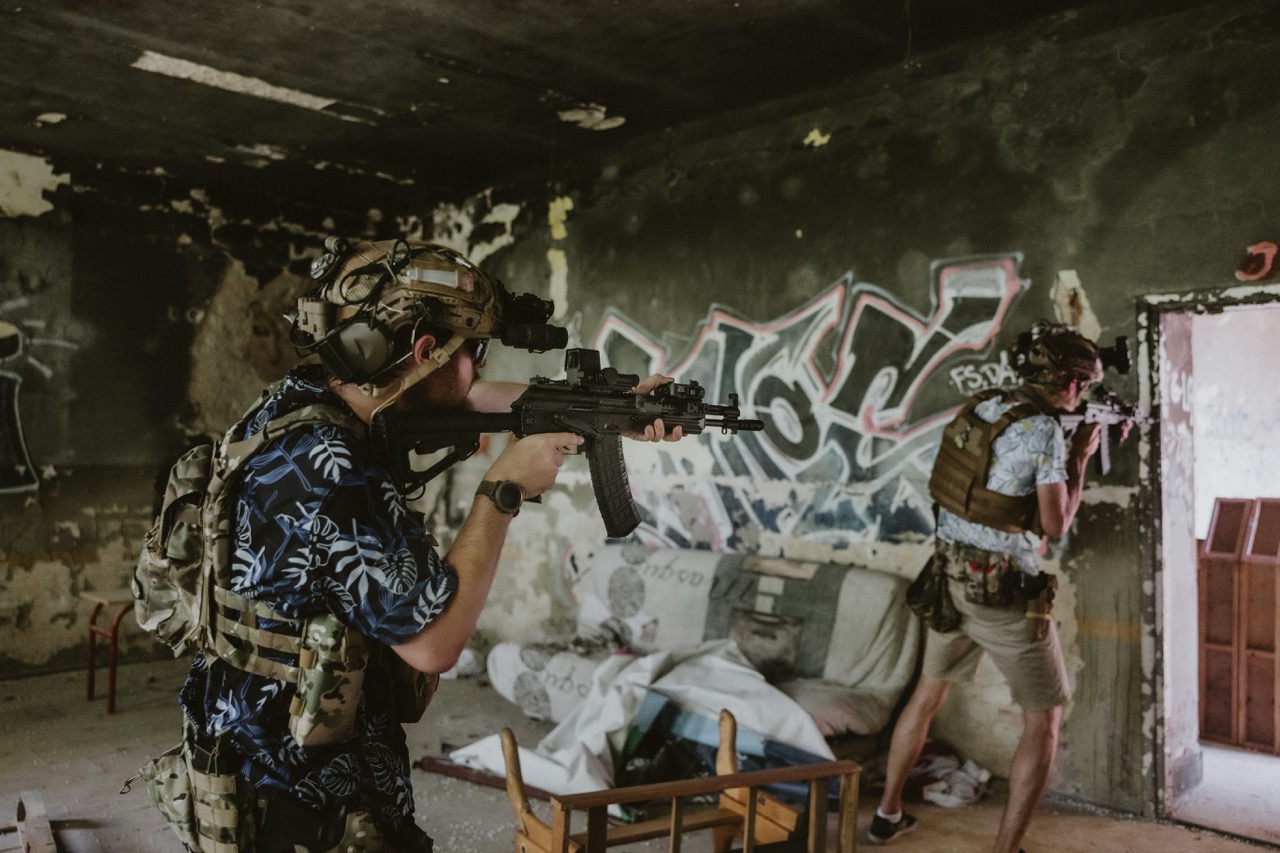
Most first-time airsoft safety advice starts and ends with eye protection, for good reason: it's the single non-negotiable piece of gear at every field. But once you start playing regularly indoors, especially in tight CQB environments where engagements happen at conversational distance, a second risk area becomes obvious fast: the lower face, including the mouth, teeth, and jaw.
Why Close Range Changes the Equation
At longer outdoor ranges, a BB has shed a meaningful amount of energy by the time it reaches a target, and hits generally sting rather than injure. Indoors, engagement distances routinely drop to a few meters or less, sometimes to a few feet during a room-clearing exchange, and energy delivered at that range is meaningfully higher. Teeth and gums are unforgiving targets: a direct hit to the mouth at close range can chip a tooth or split a lip in a way that a hit to a padded shoulder simply won't. This is part of why the general principle behind hazard-specific protective equipment selection, described in NIOSH's guidance on selecting personal protective equipment, holds up well outside its original workplace context: the protection needed for a hazard should scale with how serious and how likely that hazard actually is, and CQB airsoft measurably increases both for the lower face.
What Lower-Face Protection Looks Like
The most common solution is a full-face mask that extends below the goggles or eye lens to cover the mouth and chin, typically using a rigid mesh or solid polycarbonate shield. Some players instead pair standard goggles with a separate lower-face guard or a mouth guard similar to what's used in contact sports, though mesh or shield coverage is generally considered more reliable than a mouth guard alone, since a mouth guard does nothing for the lips, chin, or jawline outside the teeth themselves.
Weighing the Tradeoffs
Full lower-face coverage isn't free. It adds weight, can restrict jaw movement and speech clarity, and in hot weather traps more heat around the face than goggles alone. That's a real cost, which is why many players reserve full-face coverage specifically for indoor or short-range formats and switch to lighter eye protection for all-day outdoor woodland games where engagement distances are longer.
A Practical Way to Decide
- Playing predominantly indoor CQB or a mixed format with tight rooms and short hallways: treat lower-face coverage as close to mandatory
- Playing predominantly open woodland at longer engagement distances: rated eyewear may be sufficient, with lower-face coverage as a personal preference rather than a strict necessity
- Unsure of the format: check the specific field's rules, since many indoor fields require full-face protection as a condition of entry regardless of personal comfort
Whatever combination you land on, the eye protection underneath still needs to meet a genuine impact rating; a lower-face shield is an addition to proper eyewear, never a substitute for it.
Dental and Jaw Injuries Are Easy to Underestimate
New players sometimes assume a hit to the mouth is comparable to a hit anywhere else on the face: a brief sting, then nothing. In practice, teeth are rigid structures set in bone with very little give, and a direct impact can chip enamel, loosen a tooth in its socket, or split the inside of the lip against the teeth even from what feels like a moderate hit. These injuries also tend to be disproportionately expensive and slow to resolve compared to the bruising most other airsoft hits leave behind, which is worth keeping in mind when weighing the modest discomfort of a mask against the alternative.
Communication and Fogging With Lower-Face Coverage
A secondary, more practical complaint about full-face coverage is that it can muffle speech at exactly the moments clear communication matters most, mid-CQB engagement. Mesh lower sections avoid this better than solid shields, at some cost to protection against fine debris, while solid shields with a built-in mouth vent try to split the difference. It's worth testing how well teammates can understand you through whatever setup you choose during a low-stakes practice run, rather than discovering the problem for the first time during a real game.
More from the blog
All posts →Essential Tools Every Airsoft Technician Should Own
A well-stocked toolbox turns gearbox surgery from a stressful gamble into a routine afternoon project.
August 26, 2026How to Clean and Maintain Your Airsoft Gun
A regular cleaning routine keeps your airsoft replica shooting straight and lasting longer, and most of it takes less time than a single game rotation.
August 25, 2026Radio Communication Basics for Airsoft Teams
A beginner-friendly introduction to using radios in airsoft: call signs, brevity, and the basic discipline that keeps a channel useful instead of chaotic.
August 24, 2026